Biosensor Lab (Goa)
- Facilities
- Biosensor Lab (Goa)
At the BITS BioCyTiH Foundation Biosensor Lab, we empower advanced biomolecular research and diagnostic development through a suite of high-precision analytical instruments. Our facility features Preparative High-Performance Liquid Chromatography (Prep HPLC) for the seamless purification and isolation of target analytes, alongside Surface Plasmon Resonance (SPR) and Quartz Crystal Microbalance (QCM) systems for real-time, label-free monitoring of molecular interactions. Together, these technologies provide our researchers with unparalleled sensitivity and kinetic insights, bridging the gap between fundamental molecular sensing and scalable biosensor commercialization
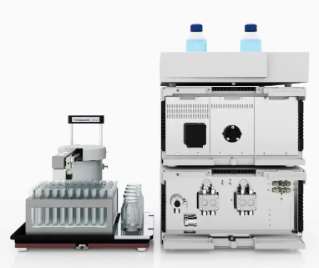
Preparative High-Performance Liquid Chromatography (Prep HPLC)
Key Features:
- High-capacity purification designed to isolate and collect milligrams to grams of high-purity target compounds.
- Precision fraction collection automated by time, peak detection, or threshold to ensure maximum recovery and purity.
- Versatile detection options (UV-Vis, PDA, or ELSD) for real-time monitoring of complex mixture components.
- Robust high-pressure performance ensuring rapid separations with high resolution, higher flow rates and sample loads.
- Scalable fluidics architecture allowing for seamless transition from analytical method development to large-scale purification.
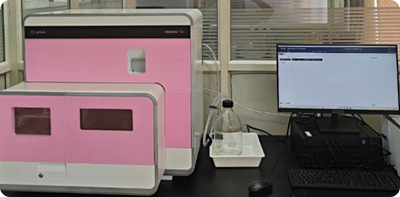
Surface Plasmon Resonance (SPR)
Key Features:
- Single-needle platform with six flow cells for efficient, parallel sample analysis.
- Exceptional sensitivity for detecting low-level and challenging molecular interactions.
- Real-time, label-free measurement of biomolecular binding kinetics and affinity.
- Flexible assay design with intuitive Biacore Insight software.
- Scalable system architecture that grows with research needs.
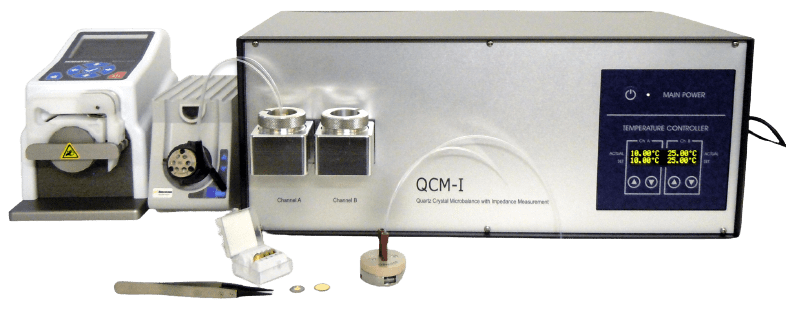
Quartz Crystal Microbalance (QCM)
Key Features:
- Real-time, label-free monitoring of surface-bound interactions and mass deposition at the molecular level.
- High sensitivity capable of detecting nanogram-scale changes in mass, ideal for thin films and polymer layers.
- Versatile environment compatibility, performing effectively in both gas/ liquid phases for diverse experimental setups.
- In-depth structural insights into molecular orientation, hydration levels, and conformational changes of the sample layer.
- Broad application range spanning biosensor development, electrochemical studies, and thin-film material characterization.